
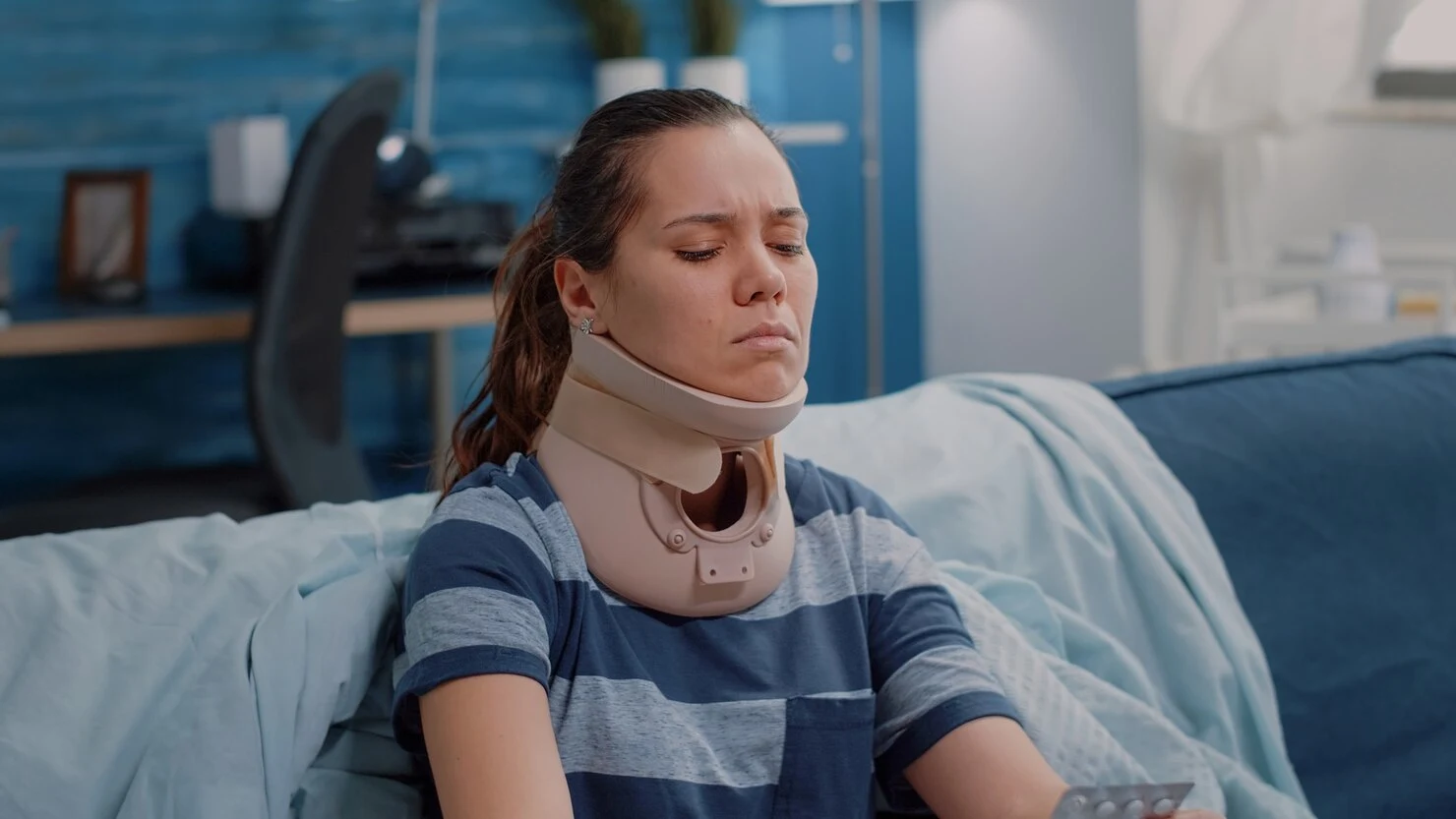
Whiplash is a soft tissue injury to the cervical spine, caused by the sudden forward-and-backward whipping motion of your head during impact. It damages the vertebrae, discs, ligaments and muscles of your neck — sometimes more significantly than the accident appeared to warrant.
At My Chiropractic Place, Dr Nam Nguyen and Dr David Addie have been helping Melbourne patients recover from whiplash Injury for a combined 49 years. Our chiropractors use the Gonstead technique — a precise, assessment-first approach to chiropractic care.
If you’ve been in an accident or you’re waking up days later with a stiff, aching neck — don’t wait. Early care makes a real difference to your recovery. We see patients at our clinics in Richmond and Caroline Springs, and you can contact us directly to book an assessment.
Whiplash, or Whiplash Associated Disorder (WAD), is an injury that occurs when rapid acceleration or deceleration forces the head to move faster than the body can follow. The resulting ‘whipping’ motion places enormous stress on the cervical spine — damaging bones, discs, muscles, ligaments and nerves in the neck.
Most commonly caused by rear-end motor vehicle accidents, whiplash can also result from falls, contact sports or any sudden forceful impact. The injury itself is often invisible on a standard scan — but the pain and dysfunction it causes are very real.
Not all whiplash injuries are the same. Clinically, they’re classified into four grades, which helps determine how serious the injury is and what care is appropriate.
| Grade | Severity | Signs |
|---|---|---|
| WAD 1 | Mild | Neck pain or stiffness. No physical signs on examination. No interference with daily activities. |
| WAD 2 (Most Common) | Moderate | Neck pain or stiffness. Physical signs present: reduced range of motion, swelling, and muscle spasm. Substantial interference with daily activities. |
| WAD 3 | Moderate–Severe | Neck pain or stiffness. Nerve involvement: reduced sensation, weakened reflexes, and referred arm pain. |
| WAD 4 | Seek Emergency Care | Neck pain or stiffness. Structural injury: fractured or dislocated vertebrae. Immediate medical emergency — do not delay. |
Most patients who come to us after an accident fall into WAD 1 or WAD 2. Both respond well to conservative chiropractic care — particularly when it begins early, before the injury has a chance to settle into something more persistent.
Whiplash symptoms vary in severity — and critically, they may not appear until hours or days after the incident. If you’ve been in a collision and feel fine right now, that’s reassuring.
Symptoms that often appear immediately
| Symptoms that may appear later
|
If any of these symptoms appear after an accident — even mild ones — book an assessment as soon as you can. We’d rather see you and give you the all-clear than have you dismiss something that turns into a months-long problem.

Whiplash forces the cervical vertebrae — the small bones of your neck — out of their normal alignment. The impact strains the surrounding ligaments and muscles, and can compress or irritate the nerves running between the vertebrae.
In chiropractic, this misalignment is known as a vertebral subluxation. Whiplash is one of the most common causes of subluxation in the cervical spine. When the joints aren’t moving as they should, the muscles tighten to protect the area, which explains the stiffness and referred pain that often spreads into the shoulders, arms and head.
This is why neck pain after a car accident can feel so wide-ranging. It’s not just your neck — it’s a connected system, and whiplash injury disrupts more of it than most people realise.

Not necessarily — but it can become chronic if it’s not managed well, and quickly. Research indicates that 43% of patients experience long-term symptoms following whiplash. More significantly, if symptoms are still present at the 3-month mark, there is approximately a 90% likelihood they will persist.*
That 3-month window is critical. The early weeks after a whiplash injury are the most important time to begin appropriate chiropractic care. Waiting to see if things improve on their own or resting completely without active management is one of the most common reasons whiplash becomes a long-term problem.
If you’re still in pain weeks after your accident, please don’t put off getting assessed. The longer an injury like this settles without care, the harder it becomes to undo.
The first step after any accident is to rule out anything life-threatening. Emergency medical practitioners can assess you for fractures, dislocations or serious structural damage. Once you’ve been cleared, chiropractic care is one of the most effective and evidence-supported conservative approaches for whiplash.
At My Chiropractic Place, Dr Nguyen and Dr Addie each bring over two decades of clinical experience to every assessment. Before any care begins, we take the time to thoroughly examine your spine, muscles and nerve function. Your history, your symptoms, your lifestyle — all of it informs your care plan. There are no pre-paid packages here, and no pressure to commit to more visits than you need.
For many patients, recovering from whiplash is also an opportunity to become more aware of their spinal health generally. Dr Nguyen and Dr Addie are both experienced resources for your ongoing wellbeing — not just your injury.
See a chiropractor for whiplash as soon as possible after an accident — ideally within the first few days. Because symptoms can be delayed, even if you feel fine initially, an early spinal assessment helps identify cervical injury before it becomes harder to manage. The sooner appropriate care begins, the better your recovery outlook.
Chiropractic care is appropriate for WAD 1 and WAD 2 — the two most common grades. For WAD 3 and 4, emergency medical assessment comes first; chiropractic care then supports your recovery once serious structural damage has been ruled out.
If your symptoms include arm weakness, loss of sensation or any serious neurological changes after an accident, seek emergency care immediately.


My Chiropractic Place has two Melbourne clinics — Richmond, where we’ve been serving the local community since 2005, and Caroline Springs, where Dr Nguyen was the first chiropractor to establish a practice when the suburb was still being built in 2007.
Between them, Dr Nguyen and Dr Addie bring 49 years of clinical experience, and both have been members of the Australian Gonstead Chiropractic Society for over 20 years. That level of experience matters when you’re recovering from a whiplash injury and need a chiropractor who knows exactly what they’re looking at.
We deliberately keep our appointment schedule accessible, with short waiting times, and you can contact your practitioner directly if you have questions. When you’re in pain after an accident, the last thing you need is to wait weeks for an available slot or leave a message with a call centre.
You choose how your care unfolds. Whether you want to address your immediate symptoms, work toward fuller recovery or simply understand the state of your spine, that decision is always yours. We give you the information, you make the call.