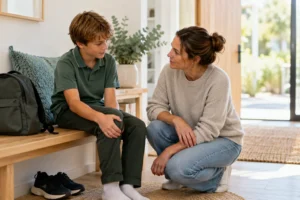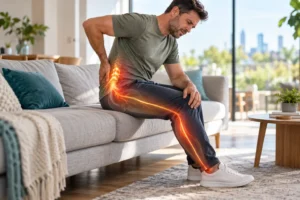
Musculoskeletal pain in children shows up as aches in the body’s moving parts: the muscles, bones, joints, tendons and ligaments. Plenty of school-age kids get it, and the good news is that most cases are minor and fade without treatment. If the pain lasts, keeps coming back or comes with warning signs, have your GP or another qualified health professional check it.
What Is Musculoskeletal Pain in Children?
Your child’s musculoskeletal system is the frame that holds them upright and lets them run, climb and flop onto the couch after school. It’s made up of muscles, bones, joints, tendons and ligaments.
Pain in this system usually takes one of two forms. Acute pain starts suddenly, often after a fall or a sports knock. Chronic pain lasts longer than about three months, or keeps returning.
Most kids feel it in one of three areas: the spine (neck, mid-back and lower back), the legs or the arms.
How Common Is Musculoskeletal Pain in Kids?
Danish researchers have found that a staggering 70% of children aged 8 to 16 experience pain in the spine or limbs lasting at least a week—data collected across three full school years. Health experts point to prolonged sitting, heavy use of electronic devices, and reduced physical activity as likely contributors to this growing concern.
So what does that number look like in real life? In the 2020 study published in Chiropractic & Manual Therapies, about 7 in 10 children had at least one week of pain in each school year. Around 3 in 10 had pain in two or three body areas at once. Parents reported the pain every week by text message.
The picture is similar in Australia. Victoria’s Better Health Channel notes that back and neck pain are common in Australian kids, and they become more common from around age 12.
Types of Musculoskeletal Pain in Children
Neck and Back Pain
Spinal pain is often linked to how kids sit, study and carry their school bags, and it tends to increase in the teenage years.
Leg Pain
Leg pain is the most common type. Another paper from the same Danish research team showed that roughly one in two kids reported sore legs in each school year, and in many cases there was no fall or knock behind it. Knees, shins and heels are frequent trouble spots.
Arm and Shoulder Pain
Arm pain is less common. It usually follows a fall, a tumble off the monkey bars or a clash on the sports field.
Signs and Symptoms to Watch For
Kids don’t always announce, “My back hurts.” Often their behaviour tells the story first. Keep an eye out for:
- Aching or stiffness after school or sport
- A limp, or favouring one side
- Skipping activities they normally love
- Pain that disturbs their sleep
- Fidgeting through homework, slumping at the table or reaching up to rub a sore neck
- The same complaint coming back week after week
Common Causes of Musculoskeletal Pain in Children
Most causes are everyday ones, which is good news, because everyday habits can change.
- Long hours of sitting: Schoolwork, gaming and phones add up fast. Heads drift forward, shoulders round, and you get the classic “text neck” slump.
- Heavy school bags: A bag slung over one shoulder pulls the spine sideways. Two straps, a snug fit and a lighter load make a real difference.
- Sport and overuse: Training hard with little rest can strain growing joints. Osgood-Schlatter disease (knee) and Sever’s disease (heel) are two common growth-related examples in active kids.
- Growth spurts: Bones can grow faster than muscles stretch, leaving kids feeling tight and sore.
- Falls and sprains: Playgrounds and backyard footy do their fair share.
Less often, pain comes from a medical condition such as juvenile idiopathic arthritis or scoliosis. Your GP is the right first stop to rule these out.
Is It Just Growing Pains?
Growing pains are real, but they follow a pattern. They usually affect both legs, appear in the evening or overnight, and are gone by morning. The next day, your child runs around as if nothing happened.
Musculoskeletal pain looks different. It tends to sit in one spot, shows up during the day and gets worse with certain movements. If the pain has a clear “address,” it deserves a closer look.
When to See a GP Straight Away
Book a GP visit promptly if your child has:
- Pain that wakes them at night or gets worse with rest
- Fever, unexplained weight loss or ongoing tiredness
- Pins and needles, loss of feeling, weak legs, or new trouble with toileting
- A swollen, hot or red joint, or stiffness every morning
- Pain after a fall or a hard knock
- A new limp or ongoing pain in a child under five
- Pain that lasts more than two weeks or keeps getting worse
Trust your gut here. No one reads your child’s moods and moves quite like you do.
Simple Daily Habits That Help Prevent Pain
To protect your child’s health and comfort, it’s essential to be proactive. A practical tip is to encourage kids to take a break from sitting every 20 to 30 minutes—a short stretch or a few minutes of walking can make a big difference. Additionally, incorporating at least 60 minutes of physical activity into their day can help strengthen muscles, improve posture, and prevent pain. Setting boundaries for screen time, especially outside of educational use, is also key to maintaining balance.
What Australia’s Movement Guidelines Recommend
The Australian 24-Hour Movement Guidelines for ages 5 to 17 suggest:
- At least 60 minutes of moderate to vigorous activity every day (short bursts count)
- Activities that build strong muscles and bones, such as climbing, jumping or sport, at least three times a week
- No more than two hours of recreational screen time a day (schoolwork doesn’t count)
- 9 to 11 hours of sleep for ages 5 to 13, and 8 to 10 hours for ages 14 to 17
How a Chiropractor Assesses Musculoskeletal Pain in Children
If your child reports symptoms such as neck pain, back aches, or discomfort in the arms or legs, it’s important to take those complaints seriously. These aren’t just “growing pains” to ignore. Chiropractic care is a non-invasive option that may help some children and adolescents with musculoskeletal pain. Trained chiropractors can assess and address postural imbalances, joint restrictions, and musculoskeletal strain.
A first visit with your child usually includes:
- A chat with you and your child about the pain, their activities and health history
- Posture, movement and spine checks
- Gentle care matched to your child’s age and size
- A referral to a GP or specialist if anything needs further tests
For very young children, the Chiropractic Board of Australia advises chiropractors not to use spinal manipulation on children under two. You can read more about our approach to chiropractic care for children.
Why Early Attention Matters
Early intervention matters. Untreated musculoskeletal issues in childhood may continue into adulthood. Research shows children with spinal pain are more likely to become adults with spinal pain, and ongoing pain can also affect sleep and daily activities. By seeking appropriate care now, you’re investing in your child’s long-term health and comfort.
Frequently Asked Questions
Is musculoskeletal pain common in children?
Very. When researchers tracked roughly 1,000 school children in Denmark, seven out of ten had pain for a week or longer during each school year. Most bouts are brief, though some children have pain that returns again and again.
How can I tell growing pains from musculoskeletal pain?
Growing pains usually affect both legs at night and are gone by morning. Musculoskeletal pain sits in one spot, shows up during the day and often gets worse with movement.
Can a school bag cause back pain in kids?
Yes. A heavy bag, or one carried on one shoulder, puts uneven strain on a child’s back and neck.
How do I know if my child’s pain needs a doctor’s visit?
See your GP if pain lasts more than two weeks, wakes your child at night, or comes with fever, weight loss, swelling, numbness or a limp.
Can children see a chiropractor in Australia?
They can. Parents can book directly, with no GP referral required. Care should suit your child’s age, and the Chiropractic Board of Australia advises against spinal manipulation for children under two.
Help Your Child Feel Better, Move Better and Grow Up Strong
Don’t let your young ones suffer in silence. If your child is showing signs of persistent pain, especially related to posture or school activities, consult a licensed chiropractor for an evaluation. Together, we can help our kids feel better, move better, and grow up strong.
If your child has ongoing aches, Dr Nguyen and the team at our Melbourne clinic can check their posture and movement and talk you through the next steps.
Sources
- Fuglkjær Møller S, Vach W, Hartvigsen J, et al. (2020). Musculoskeletal pain distribution in 1,000 Danish schoolchildren aged 8–16 years. Chiropractic & Manual Therapies, 28:45.
- Fuglkjær S, et al. (2017). Musculoskeletal extremity pain in Danish school children: how often and for how long? BMC Musculoskeletal Disorders.
- Australian Government Department of Health. Australian 24-Hour Movement Guidelines for Children and Young People (5 to 17 years).
- Better Health Channel (Victoria). Back pain in children.
- Chiropractic Board of Australia. Interim policy on spinal manipulation for infants and young children (reinstated June 2024).