
Have you noticed one shoulder sitting higher than the other? Or a slight lean in your posture that wasn’t there before? These small signs can easily be put down to habit or tiredness, but sometimes, they’re pointing to something structural going on in your spine.
Scoliosis affects an estimated 2–3% of the general population. If you’re looking for a scoliosis chiropractor in Melbourne who will take the time to assess what’s happening properly — not just tell you to ‘wait and see’ — you’re in the right place.
At My Chiropractic Place, Dr Nam Nguyen and Dr David Addie use the Gonstead chiropractic technique to assess the full spine and determine exactly what’s going on. Between them, they bring nearly 49 years of clinical experience. They’ve been helping patients across Richmond and Caroline Springs manage scoliosis since 2005 with no prepaid treatment packages.
Scoliosis is a sideways (lateral) curvature of the spine — an abnormal bend that shouldn’t be there. Normally, your spine runs in a straight vertical line from top to bottom when viewed from behind. With scoliosis, that line curves — forming an S-shape or C-shape, and often with a rotational (twisting) component through the spinal column.
It’s not just about posture. The curve can affect how your muscles function, how your nerves communicate, and over time, how your body copes with everyday movement and load.
Severity is measured using the Cobb angle — a specific X-ray measurement that tells your practitioner how far the spine has deviated from straight:
A Cobb angle between 10 and 25 degrees is considered mild. For curves between 25 and 40 degrees, the curve is classified as moderate and warrants closer monitoring. Anything above 40 degrees is severe — and at that point, the conversation often shifts toward specialist referral.
Scoliosis is a progressive condition — meaning it can worsen over time, particularly during growth spurts. This is why early detection matters.

In most cases, about 80–90%, the exact cause is unknown. This is called idiopathic scoliosis. Research suggests it may involve a combination of genetic factors, hormonal influences, abnormal nervous system development, and postural factors such as a leg length discrepancy or an uneven pelvis.
The most common form is Adolescent Idiopathic Scoliosis (AIS) — typically emerging in girls between 10 and 12, and in boys between 12 and 14, during periods of rapid growth. It’s the leading orthopaedic condition in school-aged children.
The remaining cases are secondary to a known cause — such as connective tissue disorders, neuromuscular conditions (like cerebral palsy or muscular dystrophy), congenital vertebral defects present from birth, or degenerative changes in adults as the spine ages. Degenerative scoliosis in older adults is often linked to disc deterioration, osteoporosis, or previous injury.
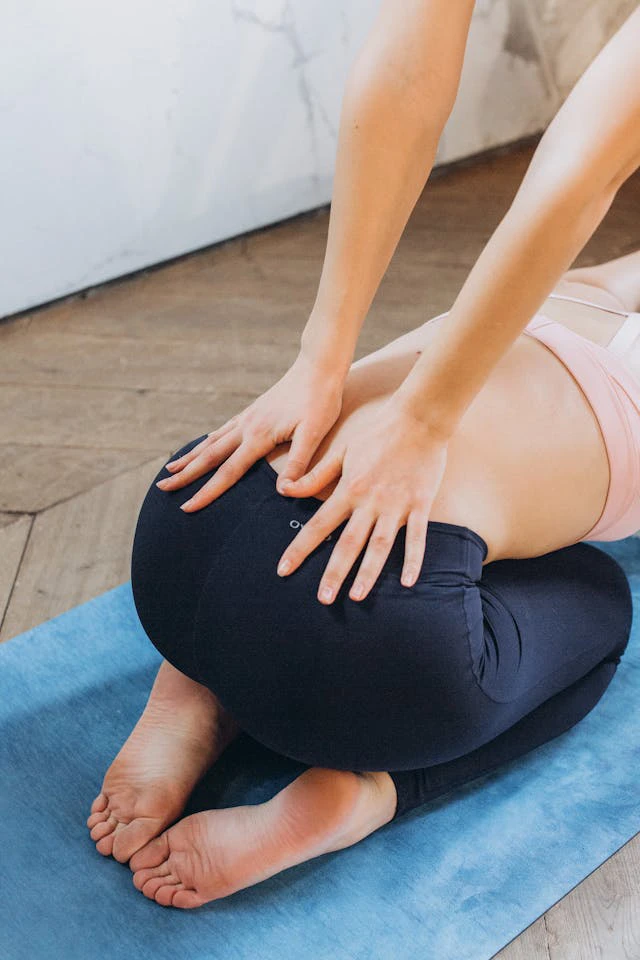
Scoliosis often develops quietly. It’s frequently a parent, teacher, or practitioner who first notices something is off — not the person with the condition themselves.
Common signs include one shoulder sitting higher than the other, a shoulder blade that protrudes more visibly on one side, asymmetrical hips or uneven waist creases, and a head that appears off-centre over the pelvis. You might also notice a visible lean in the spine, back or muscle fatigue after being upright for long periods, and reduced flexibility through the trunk.
In more advanced cases — particularly where the Cobb angle exceeds 40 degrees — scoliosis can affect breathing capacity or put pressure on internal organs.
If any of these signs sound familiar to you or your child, an assessment is a sensible next step.
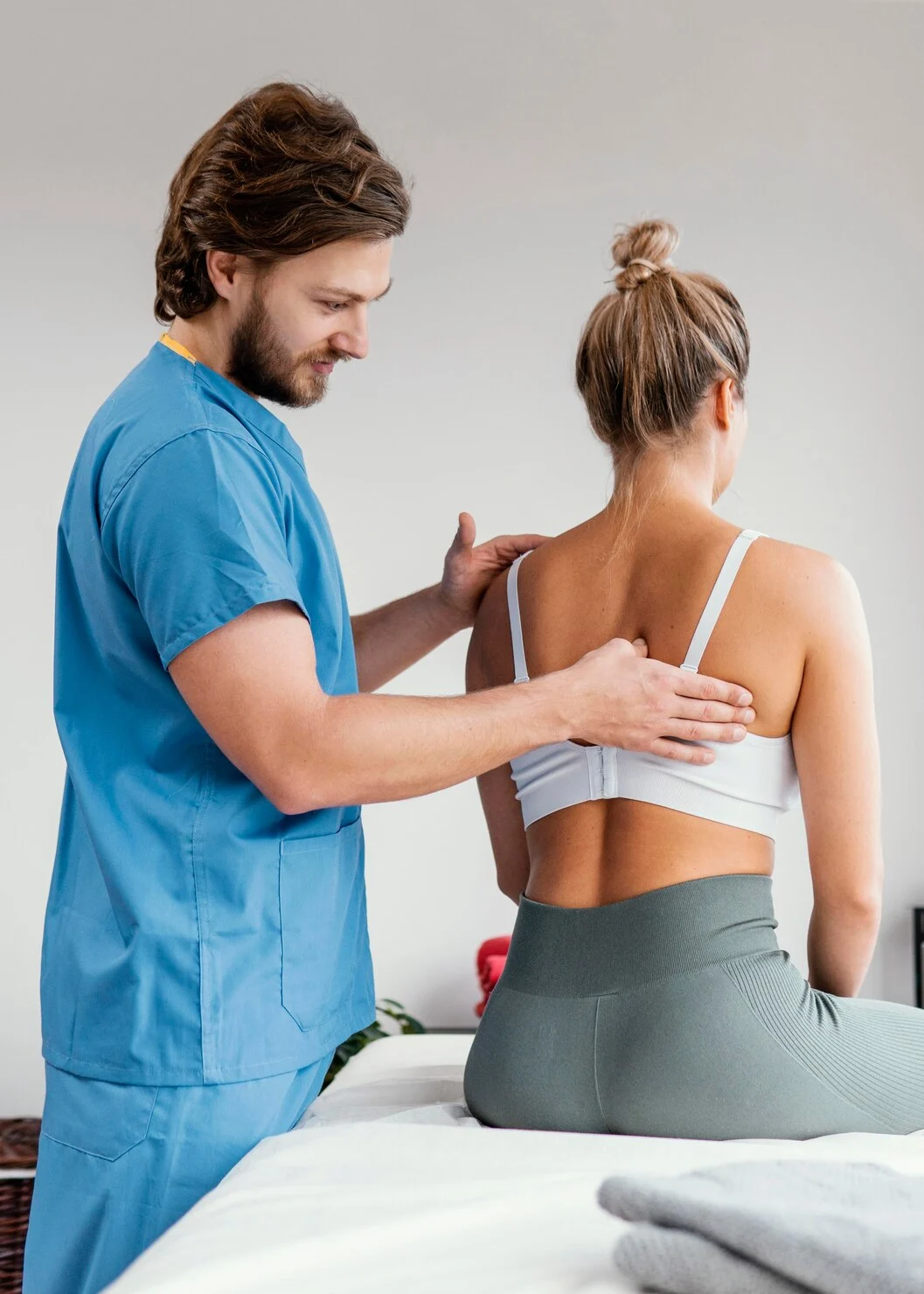
The Adams Forward Bend Test is one of the first tools used in scoliosis screening. It’s simple and non-invasive — our chiropractor asks you to bend forward at the hips with your arms hanging loosely. From behind, they can observe rib prominence or a ‘humping’ on one side of the back, uneven muscle tone, or a visible side-to-side asymmetry in the spine.
If this test suggests a curvature is present, spine X-rays are taken to confirm and measure it. The Cobb angle is then calculated from the X-ray, which tells your practitioner the exact degree and location of the curve — and guides the decision around monitoring, conservative chiropractic care, or referral.
With the Gonstead technique, our full-spine X-ray analysis goes a step further — also assessing vertebral rotation, disc integrity, leg length discrepancy, and the biomechanical relationship between spinal segments. This level of detail is what allows us to care for each patient as an individual, not just a curve on a film.

The likelihood of scoliosis progressing depends on several factors, including age, curve size, and whether the skeleton is still growing.
As long as a child is still growing — before reaching skeletal maturity — there is a possibility that the curve may worsen over time. Research has shown that females are at a significantly higher risk of progression than males, with some studies suggesting up to a tenfold greater risk. This is one reason scoliosis in adolescent girls is often monitored more closely.
More significant complications, such as moderate to severe back pain, reduced function of internal organs, and noticeable postural deformity, are generally associated with curves exceeding 40 degrees on the Cobb angle measurement. Curves of this magnitude affect only a small percentage of the population — approximately 0.1%.
This is why early monitoring and conservative care are often recommended during the mild stages of scoliosis. The goal is not to overreact, but to identify changes early and support spinal health before the condition becomes more advanced and treatment options become more limited.
Let’s be direct about something: scoliosis cannot be cured by chiropractic care, or by any non-surgical approach. Anyone telling you otherwise is overstepping.
What chiropractors can do, when applied with precision and in the appropriate clinical setting, is help manage the condition. That means improving spinal mobility, reducing associated pain and muscle tension, supporting better posture and function, and monitoring for any change in the curve over time.
At My Chiropractic Place, our approach to scoliosis chiropractic care is built on the Gonstead technique — one of the most specific and thorough methods in chiropractic practice. Rather than applying general spinal manipulation, we use detailed analysis to identify the exact vertebral segments that need attention and adjust only those. Nothing more, nothing less.
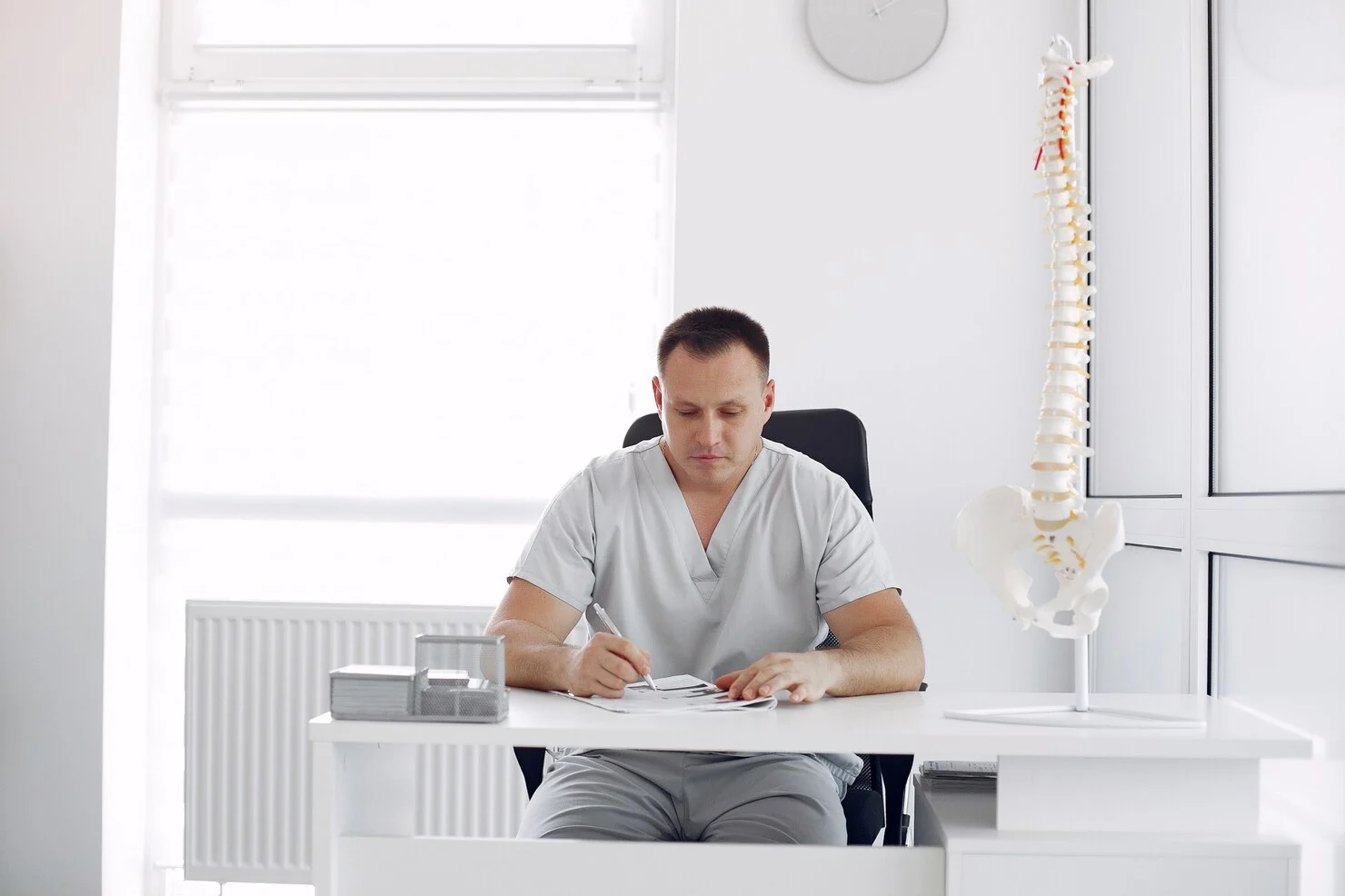
Every patient’s care at our clinic is individually designed based on the assessment findings. There are no fixed packages and no pressure to commit to a pre-paid programme upfront.
Depending on your presentation, your scoliosis chiropractic treatment plan may involve specific Gonstead spinal adjustments to the vertebral segments identified in your assessment; spinal mobilisation to improve range of motion and reduce stiffness around the curve; and corrective exercises to strengthen the postural muscles that support the spine.
We also schedule regular reassessments — including X-ray review where appropriate — to track any change in your Cobb angle over time. If we see progression that warrants it, we’ll tell you honestly and discuss what options are available, including referral.
If your curve is above 40 degrees, or if you’re a growing adolescent with a curve that’s progressing rapidly, chiropractic care alone may not be the right first approach. In these cases, we refer to an orthopaedic specialist or spinal surgeon and can co-manage your care where that’s appropriate.
You’ll always know where you stand. No surprises.
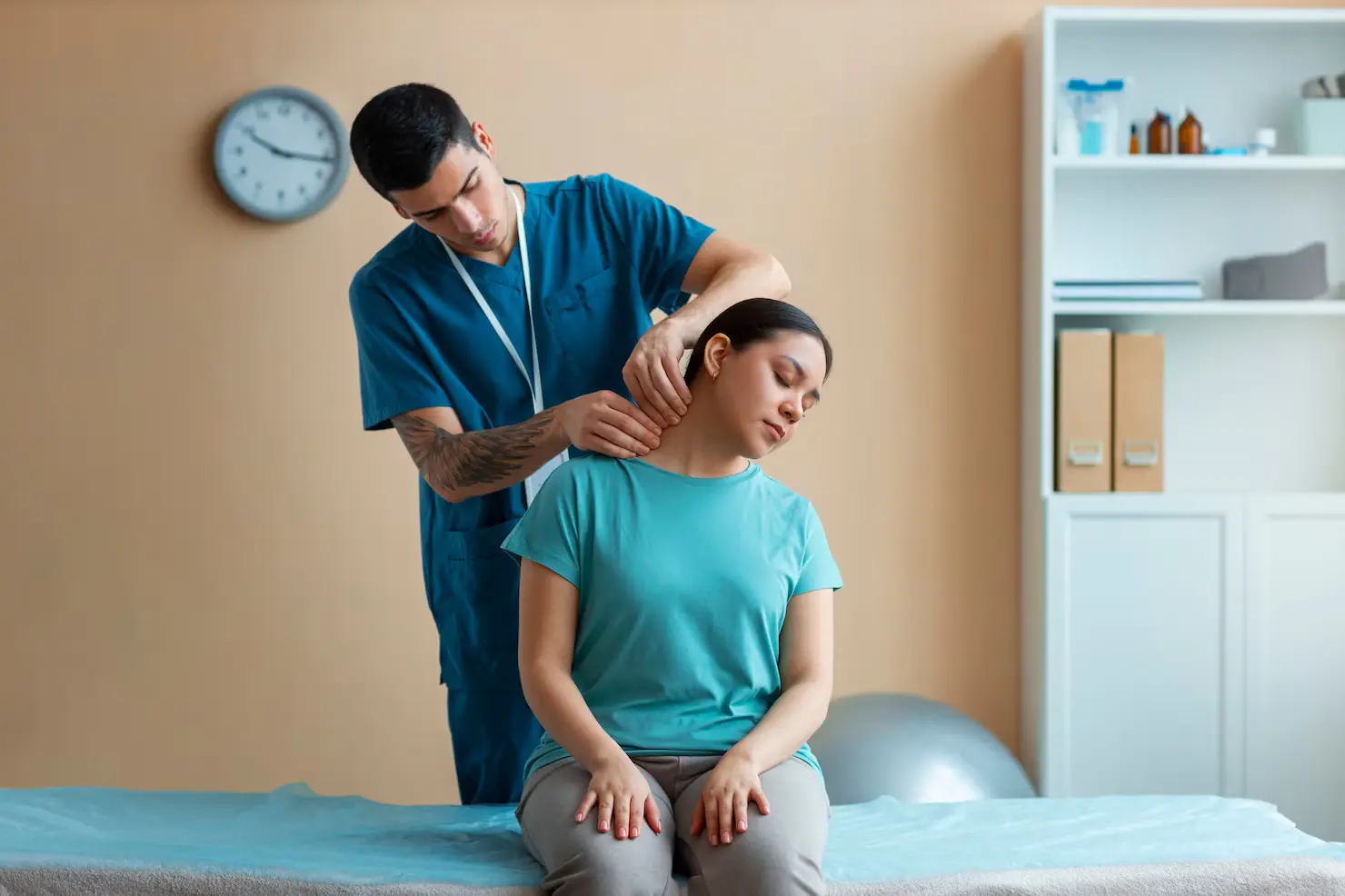
Scoliosis doesn’t look the same in every patient — and the right approach depends entirely on the individual. Broadly, chiropractic care is most relevant for:
You choose your own care pathway here — symptomatic relief, further recovery, or long-term maintenance. We support whichever direction makes sense for your life. What we won’t do is push you into care you’re not comfortable with.
Dr Nam Nguyen and Dr David Addie have each been practising Gonstead chiropractic, both holding double bachelor’s degrees from RMIT University and maintaining active membership with the Australian Gonstead Chiropractic Society for more than 20 years. That’s a combined 49 years of clinical experience, applied with precision every single day.
Our Richmond clinic has been part of the local community since 2005. Dr Nguyen opened the Caroline Springs clinic in 2007 — the first chiropractic practice to serve that community. When patients come to us, they’re not walking into a high-volume, revolving-door clinic. We keep our books deliberately manageable so that waiting times stay short and you can reach your practitioner directly when you need to.
Both clinics are AHPRA-registered, and our practitioners are members of the Australian Chiropractors Association. Every finding from your assessment is explained to you in plain language before any care begins. You decide what happens next.
Whether you’ve just noticed early signs of a spinal curve, your child has been flagged after a school screening, or you’ve been living with a scoliosis diagnosis for years and want a fresh set of eyes — we’re here to help you understand exactly where you stand.
Book your scoliosis assessment with our Melbourne Gonstead chiropractors today. No prepaid plans, no pressure — just a thorough assessment and an honest conversation about what we find.
Ahn, U. M., Ahn, N. U., Nallamshetty, L., Buchowski, J. M., Rose, P. S., Miller, N. H., … & Sponseller, P. D. (2002). The etiology of adolescent idiopathic scoliosis. American journal of orthopedics (Belle Mead, NJ), 31(7), 387.
Danbert, R. J. (1989). Scoliosis: biomechanics and rationale for manipulative treatment. Journal of manipulative and physiological therapeutics, 12(1), 38.
Chen, K. C., & Chiu, E. H. (2008). Adolescent idiopathic scoliosis treated by spinal manipulation: a case study. The Journal of Alternative and Complementary Medicine, 14(6), 749-751.
Cleere, E. (2004). Scoliosis and Chiropractic. Dynamic Chiropractic, 22, 12.
Danbert, R. J. (1989). Scoliosis: biomechanics and rationale for manipulative treatment. Journal of manipulative and physiological therapeutics, 12(1), 38.
Gleberzon, B. J., Arts, J., Mei, A., & McManus, E. L. (2012). The use of spinal manipulative therapy for pediatric health conditions: a systematic review of the literature. The Journal of the Canadian Chiropractic Association, 56(2), 128.
Morningstar, M. W., Woggon, D., & Lawrence, G. (2004). Scoliosis treatment using a combination of manipulative and rehabilitative therapy: a retrospective case series. BMC Musculoskeletal Disorders, 5(1), 32.
Morningstar, M. W. (2011). Outcomes for adult scoliosis patients receiving chiropractic rehabilitation: a 24-month retrospective analysis. Journal of chiropractic medicine, 10(3), 179-184.
Morningstar, M. W. (2011). Four-Year follow-up of a patient undergoing chiropractic rehabilitation for adolescent idiopathic scoliosis. J. Pediatric, Maternal & Family Health, 2, 54-58.
Morningstar, M. W. (2007). Integrative treatment using chiropractic and conventional techniques for adolescent idiopathic scoliosis: outcomes in four patients. JVSR, 7, 1-7.
Romano, M., & Negrini, S. (2008). Manual therapy as a conservative treatment for adolescent idiopathic scoliosis: a systematic review. Scoliosis, 3(2), 1748-1761.
Rowe, D. E., Feise, R. J., Crowther, E. R., Grod, J. P., Menke, J. M., Goldsmith, C. H., … & Kambach, B. (2006). Chiropractic manipulation in adolescent idiopathic scoliosis: a pilot study. Chiropractic & Manual Therapies,14(1), 15.
Tarola, G. A. (1994). Manipulation for the control of back pain and curve progression in patients with skeletally mature idiopathic scoliosis: two cases.Journal of manipulative and physiological therapeutics, 17(4), 253.